Can a machine create art?
Deep Learning: Creating Art with Neural Style Transfer
Besides classification and object detection, convolutional neural networks can be used to artificially generate suprisingly beautiful works of art. One such way is called the neural style transfer, a technique developed by Leon A. Gatys, Alexander S. Ecker and Matthias Bethge.
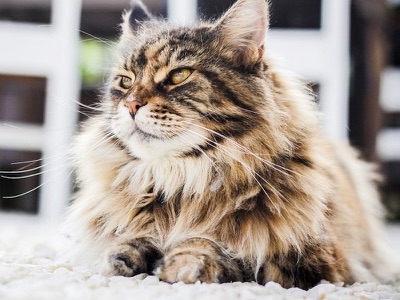
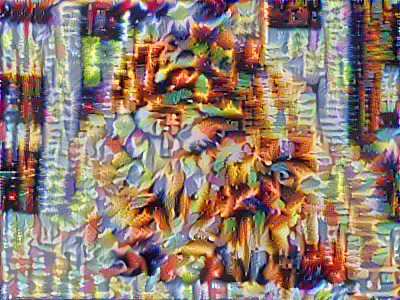
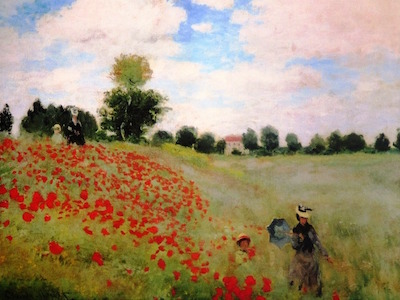
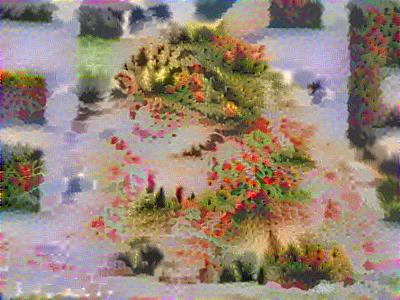
You can read their paper here, but the gist of it is this – Neural Style is an algorithm that takes a ‘content’ image (kitty cat), a ‘style’ image (painting) and outputs a generated image where the ‘content’ image takes on the artistic characteristics of the ‘style’ image. Defining a cost function for the generated image, we use gradient descent to minimize the cost and create the image we want. So unlike in most algorithms where we optimize the cost function to get a set of parameter values, in Neural Style Transfer we optimize a cost function to get pixel values.
The algorithm builds on top of a pre-trained convolutional network. We’ll go with the what the authors of the paper used - VGG-19, trained on the very large ImageNet database.
In these particular examples, I used TensorFlow but there are lots of other great deep learning libraries where gradients are automatically and dynamically computed for you. Pytorch is another library I’d recommend. Although it helps to have a GPU for training, a CPU and a little bit of patience works as well. :)
So let’s see if we can create an artistic rendition of this cat.
Content Image
Style Image - Rain Princess 2 by Leonic Afremov

Generated Image
Style Image - The Poppy Field by Claude Monet
Generated Image
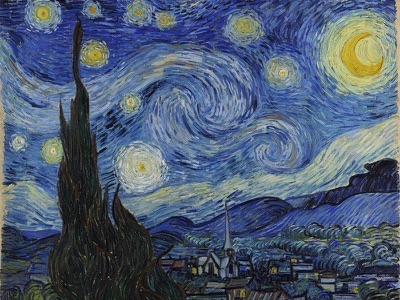
Style Image - Starry Night by Vincent Van Gough
Generated Image
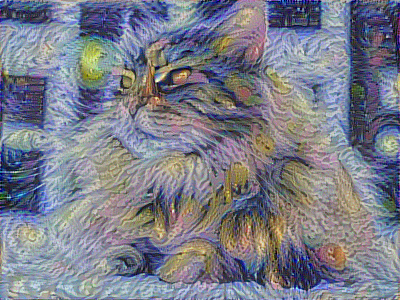
Okay, okay maybe it’s not what you’d call a masterpiece but it’s still pretty cool. It really depends on what content and style images you mix and match. Generally, you start to see attractive results after 140 iterations of training. The generated images in the examples above are after 200 iterations. You can also get better results if we “merge” style costs in different proportions from several different conv layers.
Much credit and thanks to Andrew Ng’s Deeplearning.ai course. I highly recommend it if you want to use deep learning for your own experiments.